

Jupiter lenses are well known amongst manual focus fans. Their cheap price point means they can be a great alternative for those who want to shoot rangefinders on a budget. The Jupiter 12 is a 35mm f2.8 lens, and probably one of the most interesting of the Jupiter range.
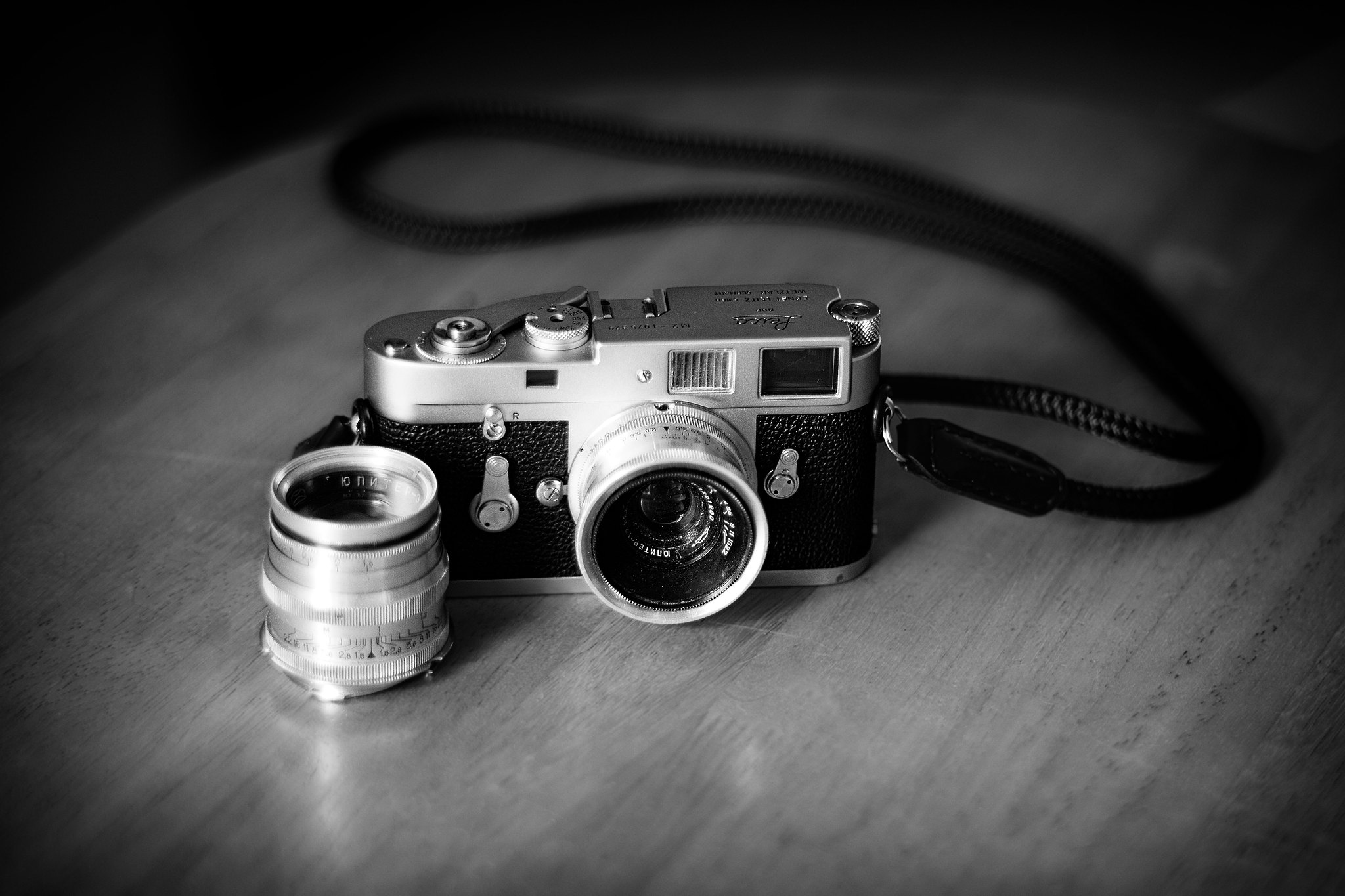
As well as having an LTM/M39 mount, the Jupiter 12 is also rangefinder coupled, which means that you can use it with the focus system on Leica M bodies with a straightforward M39 to M adaptor. Of course, it can also be used as a pure manual lens on mirrorless cameras such as the Sony A7, or certain Micro Four Thirds bodies. I have used mine on a Leica M8, M Typ 240, M6, and M2 with no problems, though I do feel like they shine best when shot on film.

The Jupiter 12 is based on an old Biogon design which pre-dates the Second World War. In this incarnation, there is a wide built in ‘hood’, and the aperture control doubles up as the filter ring, which can cause some issues if you use a circular polariser.
TL;DR Specs:
- Filter thread size: 40.5mm.
- Aperture range: f2.8-f22.
- Clickless aperture ring
- Focal Length: 35mm.
- Minimum focus distance: 1m.
Things to watch out for
- Unusual Aperture Control: The aperture ring on the Jupiter 12 sits on the front of the lens, and is step-less. This means that it can easily be knocked out of position, and you need to look at the front if you want to change the aperture. Depending on how you shoot, this may well slow you down… and it does mean that you can’t really take advantage of the smooth aperture ring when shooting video, as your hands would end up in the frame.
- Long rear element: The Jupiter 12 has an unusual design, where the front element is recessed inside the metal chassis, and the rear element extends in a convex shape significantly past the mount. Aside from making it difficult to find lens caps, this also means that there is the risk that the lens itself could hit your camera’s sensor. Personally, I have used this on both a Leica M Typ 240 and Sony A7 with no issues, but it’s something you’ll want to be aware of before whacking it on your own camera body with gay abandon. It reportedly has trouble mounted on a Canon 7, though this seems to depend on the individual body. I’ve had three Canon 7 models, and had different experiences with each.
- Quality variation: Russian lenses are often reported as having issues as a result of their approach to production. Lenses were produced over a long period of time across different factories, and with differing levels of quality, and supposedly poor consistency between batches. This means that you can look for lenses from a specific period to try and get a good copy, but in reality it’s always going to be a bit hit-or-miss. Some of these lenses can be brilliant, and others might not be that great at all. I’ve personally only had experience with good copies of the Jupiter 12, but have also used some other models of Jupiter lenses that were definitely not good. You are unlikely to find a truly terrible copy though (at least if it’s in good condition), and given the price of the Jupiter 12, it’s worth the gamble.
- Leica compatibility: The Jupiter lenses were originally calibrated for the Zorki standard, which is slightly different to the Leica standard (also used in Canon rangefinders). This means that the focus point may be very slightly off, which can be an issue when shooting wide open. There is a way to adjust this, but it involves more work than I think is worth it for a lens which already has so many quirks and imperfections. Plus, I’m not sure whether any mis-focussing would actually be down to a calibration issue, or if that would just be a convenient excuse for my crappy technique. Either way, it’s unlikely to present a real problem with the Jupiter 12, given the maximum aperture of f2.8.
My experience
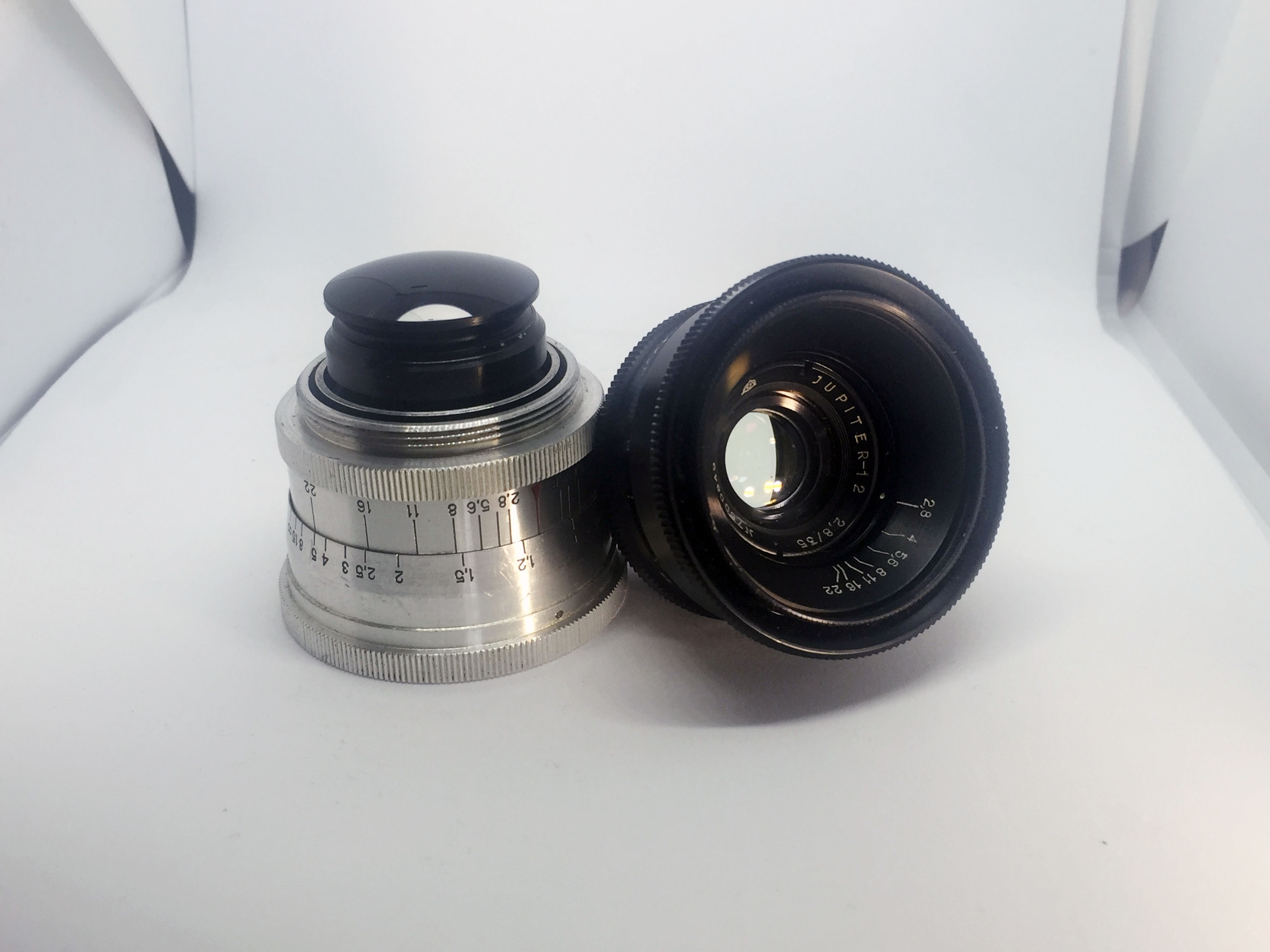
I have two versions of this lens:
- Silver ‘PT0820’ lens from 1952, made by KMZ.
- Black ‘PT0835’ lens from 1976, made by LZOS (KMZ satellite plant).
(For more details on the Jupiter 12 variations, check out this page.)

The silver Jupiter 12 was one of the first lenses I got when I started shooting with Leica M bodies. I picked it up mostly because it was a cheap, relatively fast rangefinder coupled lens – and I didn’t have much money after buying the M8. I ended up shooting with it as my main lens for a good few years, and it has accompanied me on lots of travels. I have a bit of a soft spot for its quirky nature, even if I no longer use it as much as I used to.
The black lens is one I got more recently. It has some kind of coating that the silver lens does not, and it feels a lot less shoogly. The focus and aperture rings are much smoother on my black version, and it’s led me to suspect that I will need to get the silver one cleaned and tightened up at some point.
Why do I have two? Because I am an idiot. Curiosity got the better of me when writing this blog, and I decided to pick up the newer black model to see what the differences were. Which were… err, not much.

In terms of image performance, the Jupiter 12 is a fairly decent, reasonably fast all rounder; one which gives a certain character to the images that I can’t put my finger on – though it doesn’t have any kind of interesting bokeh worth mentioning. It’s nice and compact when used on a rangefinder, and its simple mechanical nature is really satisfying to use, making you feel like you’re more connected to the shooting process than with some other more complex lenses. Rather than the quirks like the aperture ring’s placement annoying me, I actually find them quite endearing. For general street shooting, the Jupiter 12 is one of my favourite manual focus lenses, and as I mentioned already, it’s almost definitely my favourite (or at least, most useable) of the Jupiter range.
It has to be said that this is one of the lenses that I don’t actually like to use that much on either the Sony A7 or Leica M Typ 240. It just doesn’t feel right. Rather, it’s much more suited to a film rangefinder body.
Cost and availability
Jupiter lenses are fairly plentiful, and easily found on eBay. The Jupiter 12 is a bit less common than some others, but there are still a lot of them to be had. There is a fair bit of variation in price depending on the condition and year of manufacture (earlier models command a higher value). The cost of these has gone up in the past couple of years, so expect to pay around £40-£120 for one in good condition.
So what’s the verdict? I like my Jupiter 12s. They have soul, and are one of the most affordable 35mm rangefinder coupled lenses out there. For that reason alone, it might be worth picking one up. That said, I have to admit that mine have fallen out of favour recently since I got a more modern Voigtlander Nokton 35mm f1.4 (and a Canon 35mm f2 for my Canon 7) but I don’t think I could bring myself to sell them on any time soon. For all of their flaws, they still have a rather unique charm about them.
Photos
I have a bunch of pictures from my travels with the Jupiter 12 35mm f2.8 over the years. Here’s a selection:
Leica M6 and Silver Jupiter 12 35mm f2.8 (on film):












Leica M8 and Silver Jupiter 12 35mm f2.8 (digital):





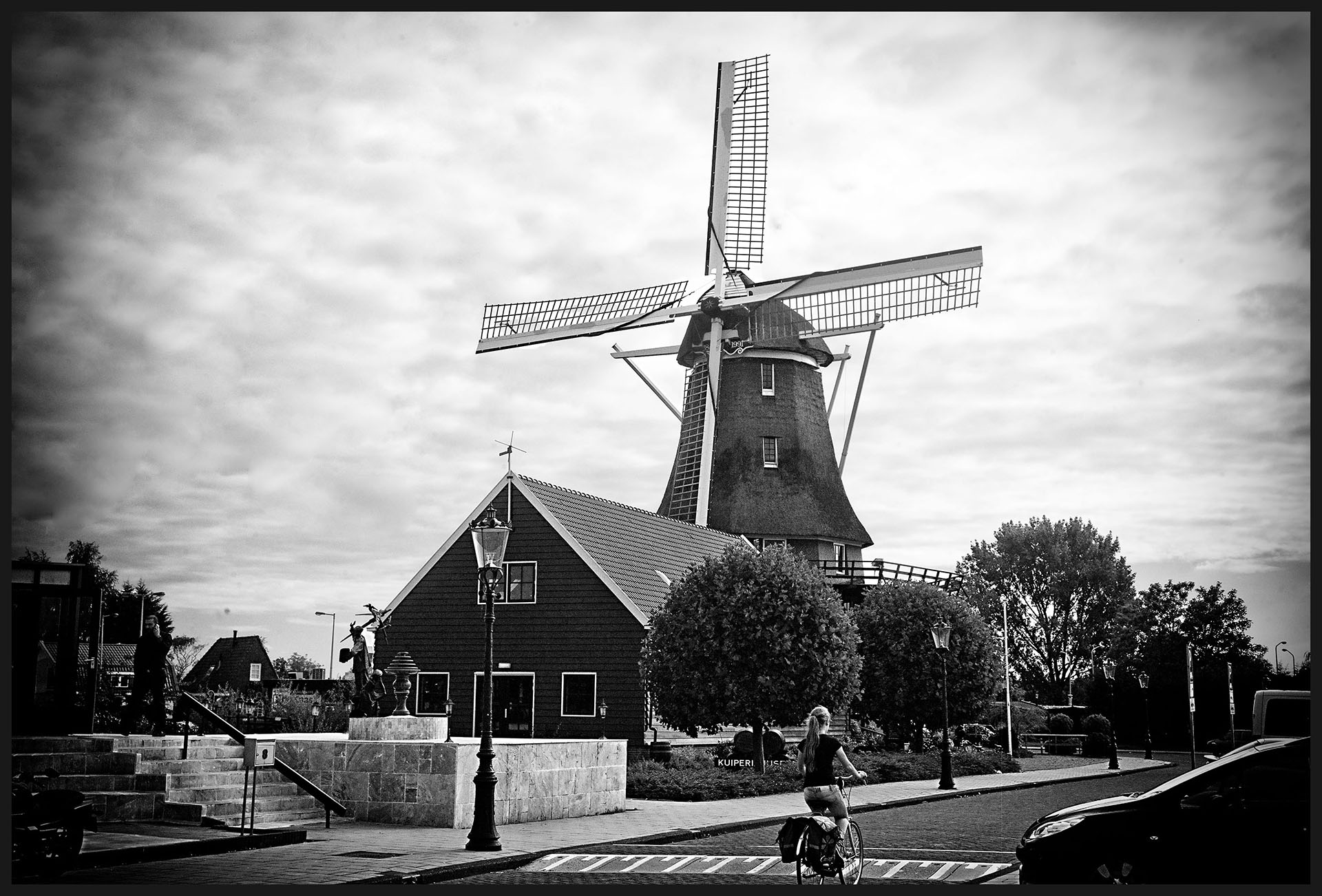





Leica M2 and Black Jupiter 12 35mm f2.8 (on film):





—
Disclaimer: As usual, this article isn’t intended to be a comprehensive, pixel-peeping review. Rather, it’s highly subjective, and reflects my research and experience as someone who has shot with a lot of different cameras and lenses over the years. No aperture comparison charts here.