Introduced in 1961, the Canon 50mm f0.95 is an elusive, super-fast ‘dream lens’, which holds the title of the fastest 35mm lens ever produced for commercial use. Nowadays, there are a bunch of different options to be found at f0.95, but the dream lens is still highly sought after, and retains a special place in photographic history. I’ve written a bit about my experience with the 50mm f0.95 before, in this post where I compare it to the Canon 50mm f1.2. At the time, I hadn’t shot it with the Leica M Typ 240, or the Sony A7, and it’s such a unique lens that it deserves a post of its own.
As I mentioned in that previous post, I have owned two versions of the lens; the first was the original, mounted on a Canon 7, and the second (current) lens has been converted to the Leica M mount. I wasn’t really a fan of the lens when shooting film, as getting it to focus was too hit or miss, and it depends too much on perfect calibration. As a result, in this post I’m purely going to talk about my experience with it on modern digital bodies.

The lens bucks the trend of many lenses in that it is relatively ‘fat’… in that it is wide, rather than long. This results in an unusually large front element, and a really distinctive look which I think is particularly beautiful. It is also surprisingly heavy, with an all metal and glass build that comes in at over 600g.

Performance
At first, I had written a whole spiel about how this lens couldn’t really be compared to any other yadda yadda, but ended up deleting it. The bottom line is, if you want to know how the 50mm f0.95 performs in the range of f2.8 and above, you’re barking up the wrong tree. As a general purpose lens, there are endless other choices that perform far better. In truth, I only ever shoot this at f0.95 (or thereabouts), and if I need something a bit less specialist, I’ll switch it out for the 50mm f1.2, which is far smaller, and far quicker to focus than the f0.95 beast.

However, that said, I really love this lens. Shot wide open, it produces some of the most distinctive images of any lens I’ve ever used. The character of the pictures feel like they match how I view my own style: bright colours, dreamy backgrounds, and intense bokeh. Others may disagree, but I think it’s a beautiful lens for shooting people; capturing them in all of the swirly, vibrant lives that they lead. I won’t go as far as to say it manages to grab a glimpse of their aura, but it definitely seems to soak up an extra something that most other lenses seem to miss. That might well sound like art wanker pish, but the images always end up with a special edge and atmosphere that I struggle to recreate otherwise.
Low light
Stepping aside from the subjective for a minute, one of the obvious strengths of the 50mm f0.95 is the ability to shoot in situations where most other lenses would struggle – the kind of situations where people cock their heads and go: “Err, why aren’t you using a flash? Is it not too dark?”. I vividly remember a number of times where I reluctantly brought the lens along to an event, only to thank my lucky stars that I had done so when all of the lights were turned off and I was still able to get usable pictures.
One thing to note is that despite the lens’s amazing capabilities in low light, these do not extend to concert photography, as some seem to think they should. The manual focus, long throw, propensity to flare (see below), and shallow depth of field make it a nightmare to get decent shots. You can get great results in certain lighting conditions of course, but for a general gig lens, there are far better options available.
Bokeh
You can’t really talk about the 50mm f0.95 and not bring up bokeh. Some people hate it for its supposed technical imperfections, but in reality, if you like big, interesting bokeh, then you will love this lens. Out of focus areas are reduced to a beautiful, creamy mush, and pinpricks of light turn into beautiful glassy circles.

Flaring
For whatever reason, the 50mm f0.95 is pretty susceptible to flare when shooting wide open and faced with direct light. It’s probably one of the flariest lenses I’ve ever shot with – and seems to get even more so with a UV filter in place (which, given the size of the front element, is advisable). Luckily, the flare is also pretty spectacular.


Things to watch out for:
With a lens like this, there are naturally a lot of quirks and oddities to be aware of.
- Mounting – The original version of the lens that was used with the Canon 7 body had a special locking bayonet mount which only fitted that particular camera. The cameras themselves are really nice Japanese rangefinders, but if you end up finding one of these particular lenses, it means that you are restricted to just the one body, and to just film. There are two alternatives to this: either finding a lens that has been converted to a Leica mount, or buying an original lens and getting someone to convert it for you. The latter is not particularly easy to do, as there aren’t many people worldwide who are prepared (and able) to do carry out such a conversion… Everybody I contacted a few years ago when researching a second 50mm f0.95 purchase weren’t taking new jobs on, or had unbelievably long waiting lists. Long story short, the converted lens is the one to have – though they are inevitably more expensive. There are those who claim that it is somehow sacrilegious to modify a classic lens, but in my opinion, that’s nonsense. I’d much rather see these beautiful lenses have a new lease of life breathed into them and out in the open getting used, rather than sitting gathering dust in a display case somewhere. When we visited Tokyo, I actually saw one behind glass in camera shop with a sign that said ‘not for sale’, which made me kind of sad.
- Focussing – Focussing this lens is not the easiest thing in the world, as the margin for error is so thin. If using a rangefinder, things really need to be calibrated down to a T. If you like to switch camera bodies a lot, this isn’t always practical, even if it is technically possible. What I’ve found best is making use of live mode on cameras that allow for it – even if that might be considered heresy by some. If you’re finding that your shots seem ‘soft’, be sure to check that it isn’t just your focus that is slightly off, as it’s incredibly easy to do with this lens.
- Aperture Ring – There are a few different versions of the 50mm f0.95 – some of which were coupled to the Canon 7, and others that were used as ‘TV’ lenses. Optically, they are the same, but there are some functional differences. Generally, the lenses that were used for video had their aperture ring ‘de-clicked’, whereas the 35mm versions did not. That said, it isn’t always the case, and it’s impossible to tell without checking, as so many have been modified. For example, both of mine were 35mm lenses, but just the second had the click-less aperture ring. If I had to choose, I would probably have gone with the clicky aperture ring, as the one I have just now is a bit loose, and easy to knock out of place when shooting. (From what I gather, the TV lenses have ‘TV’ marked on the front, and cannot be converted to be rangefinder coupled).
- Focus Ring – This again varies with the copy of the lens you get, but in general, the throw of the focus ring on the 50mm f0.95 is ridiculously long, and has a fair amount of resistance. This is not a quick focussing lens, by any means. In some ways that’s a good thing, as the depth of field is so thin that you want that extra control, but it does mean that you definitely need to pre-focus, or leave your subject standing about while you slowly spin the ring round and round to get into the ballpark.
- Lens Release Button – Ah yes. As mentioned already, the front element is huge. Huge, and pancake like. It is gorgeous, but it does have some disadvantages, like the fact that the lens actually covers the lens release button on Leica M bodies such as the M Typ 240. To get the lens off, you need to use an implement to depress the button. I usually use the edge of a credit card, as not a whole lot of force is required. Probably best to avoid using something metal and scratching the button though, if you care about that kind of thing. It can be a bit of a pain when you forget, and are in the middle of trying to switch lenses though, but that’s one of the hardships of shooting with such a unique lens; the idiosyncrasies.
- Sitting Level – The bottom of the lens extends past the bottom of the camera base on the Leica Ms, which means the camera doesn’t sit level. The weight of the lens also means that a whole setup is front heavy.
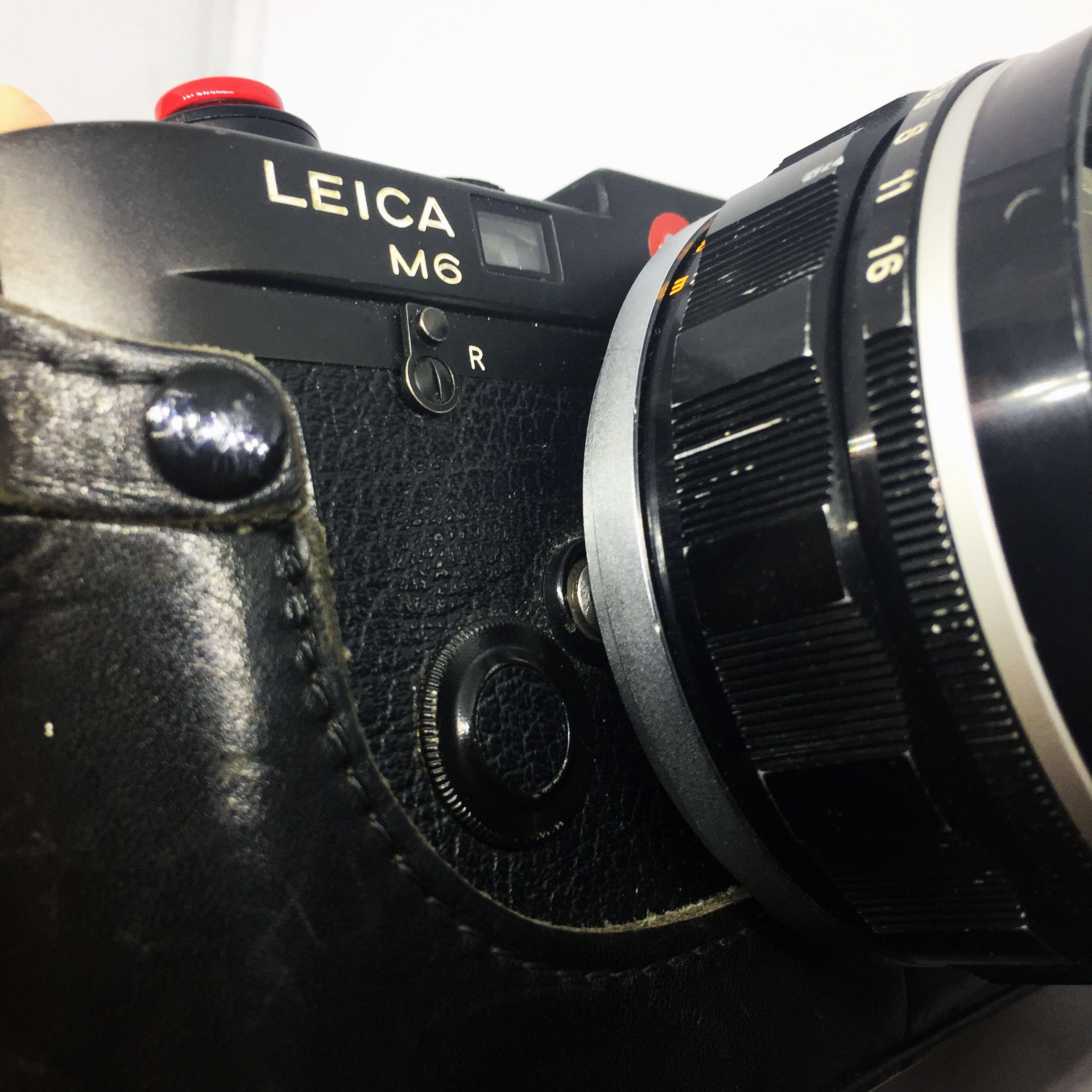
All of that said… this is not a normal lens, and the quirks and oddities are partly what make it so interesting. If you’re concerned about perfection, this is not the gear for you.
Cost and availability
The Canon 50mm f0.95 lens is infamously rare and expensive. In reality, there’s usually a couple floating around on eBay, but the prices are now at the highest mark for a long time. When I bought my first of these lenses, I got it and a Canon 7 body for about £500 total. A year or so later, I sold the pairing for almost £1500. When I bought the one I have now a few years ago, it was close to £2,000. Now, prices are anywhere from £2,000 to £5,000. Ouch.
One thing to bear in mind is that the only real comparison for this lens at the same speed is Leica’s own f0.95 Noctilux, which costs at least £6,000 (if you are lucky) – though in my opinion, I believe they are pretty different beasts.

Images
Below are a selection of pictures taken with the 50mm f0.95 on a couple of different digital bodies. As usual, this isn’t intended to be a comprehensive technical review, but rather an explanation of my own personal experience as someone who actually shoots with the lens regularly – and the shots are a demonstration of what it can do within my style.
Canon 50mm f0.95 and Leica M Typ 240














Canon 50mm f0.95 and Sony A7