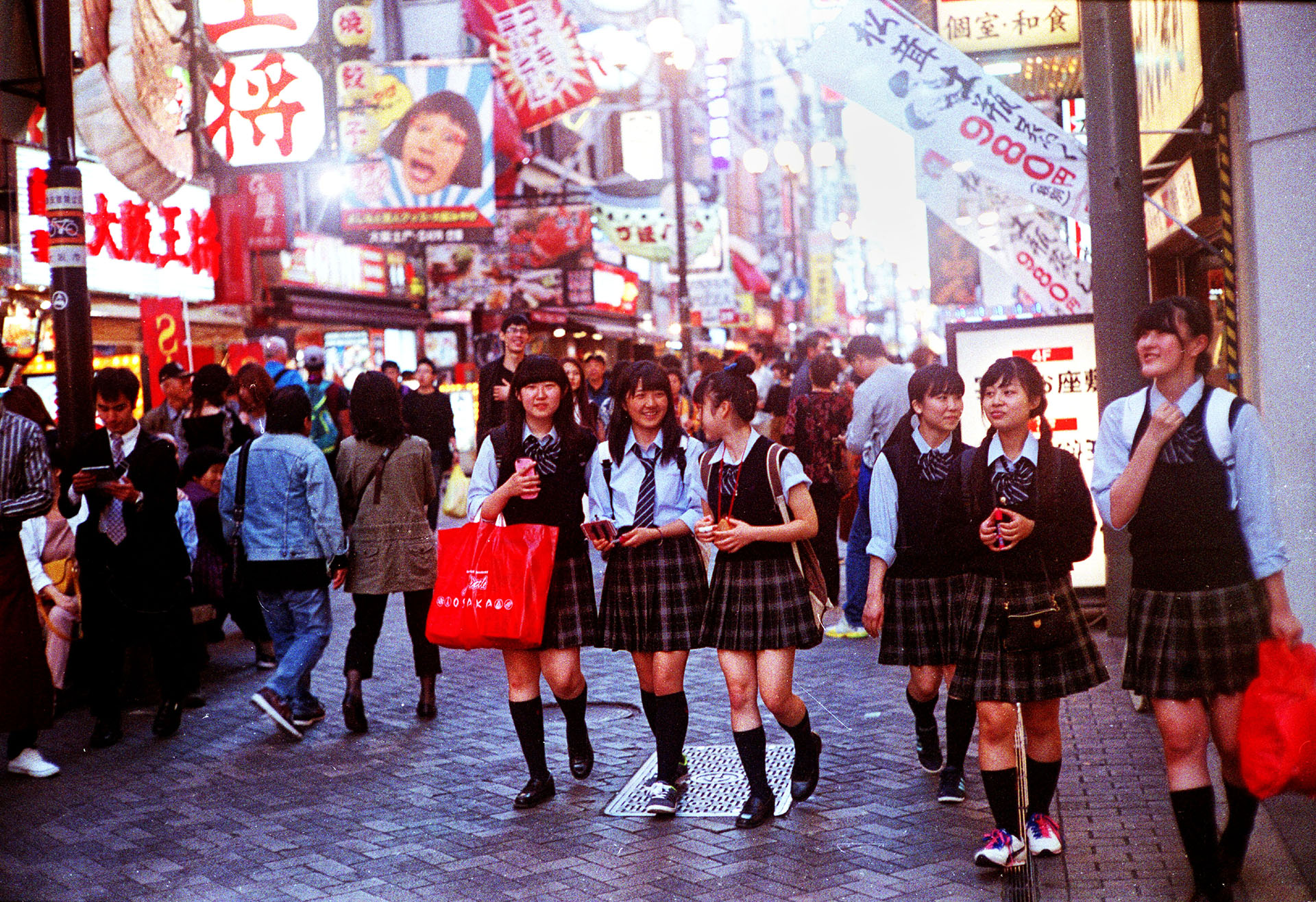
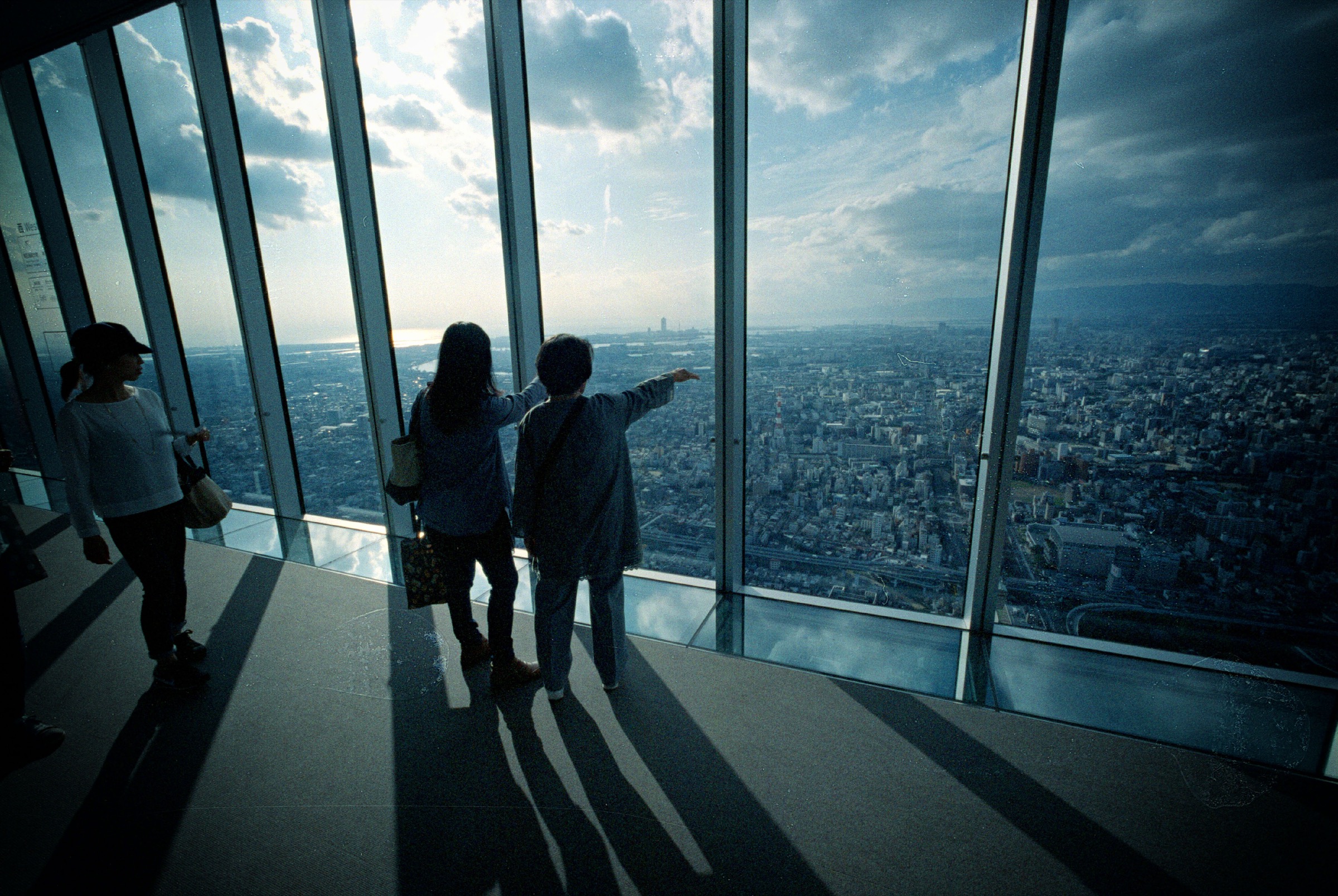
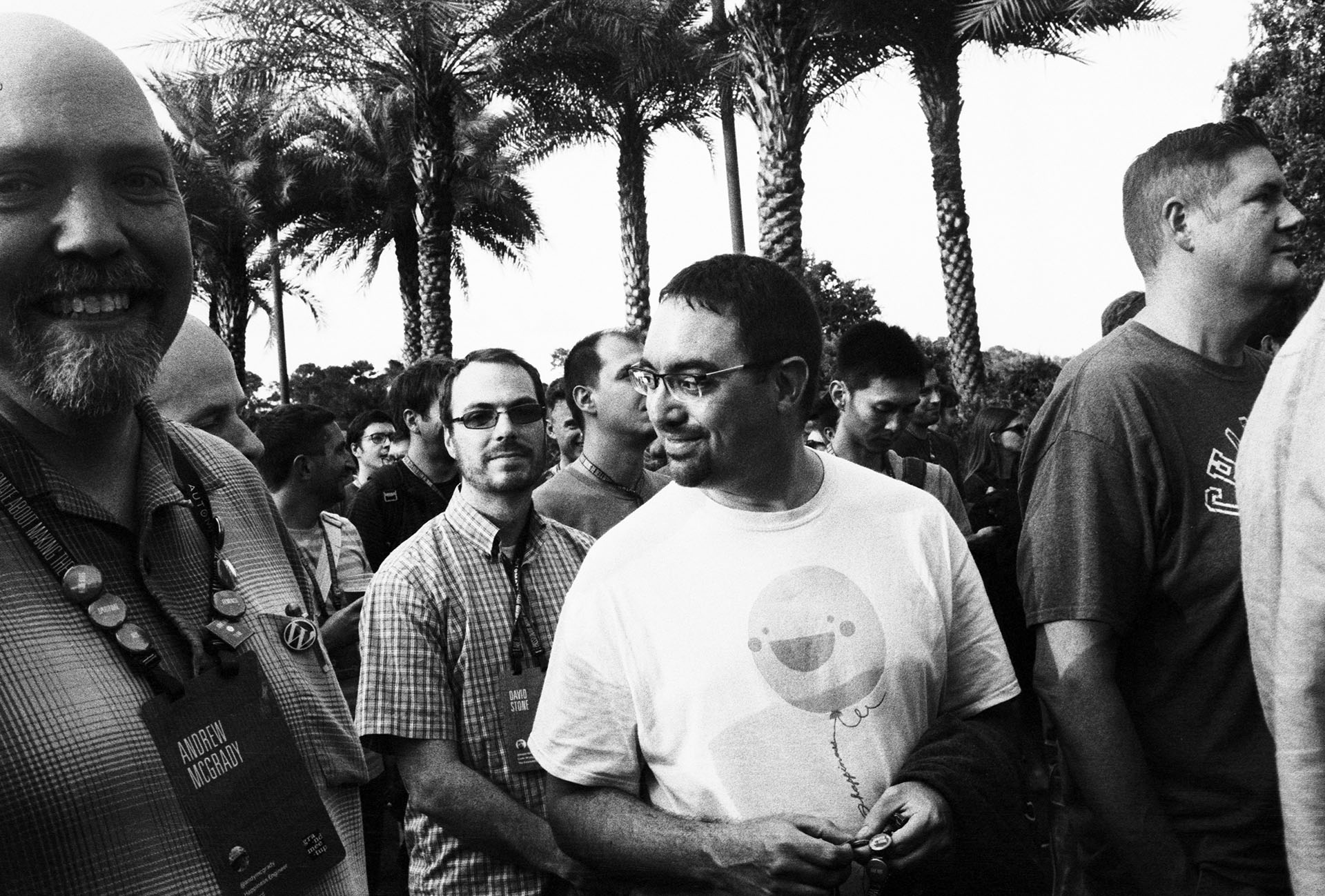
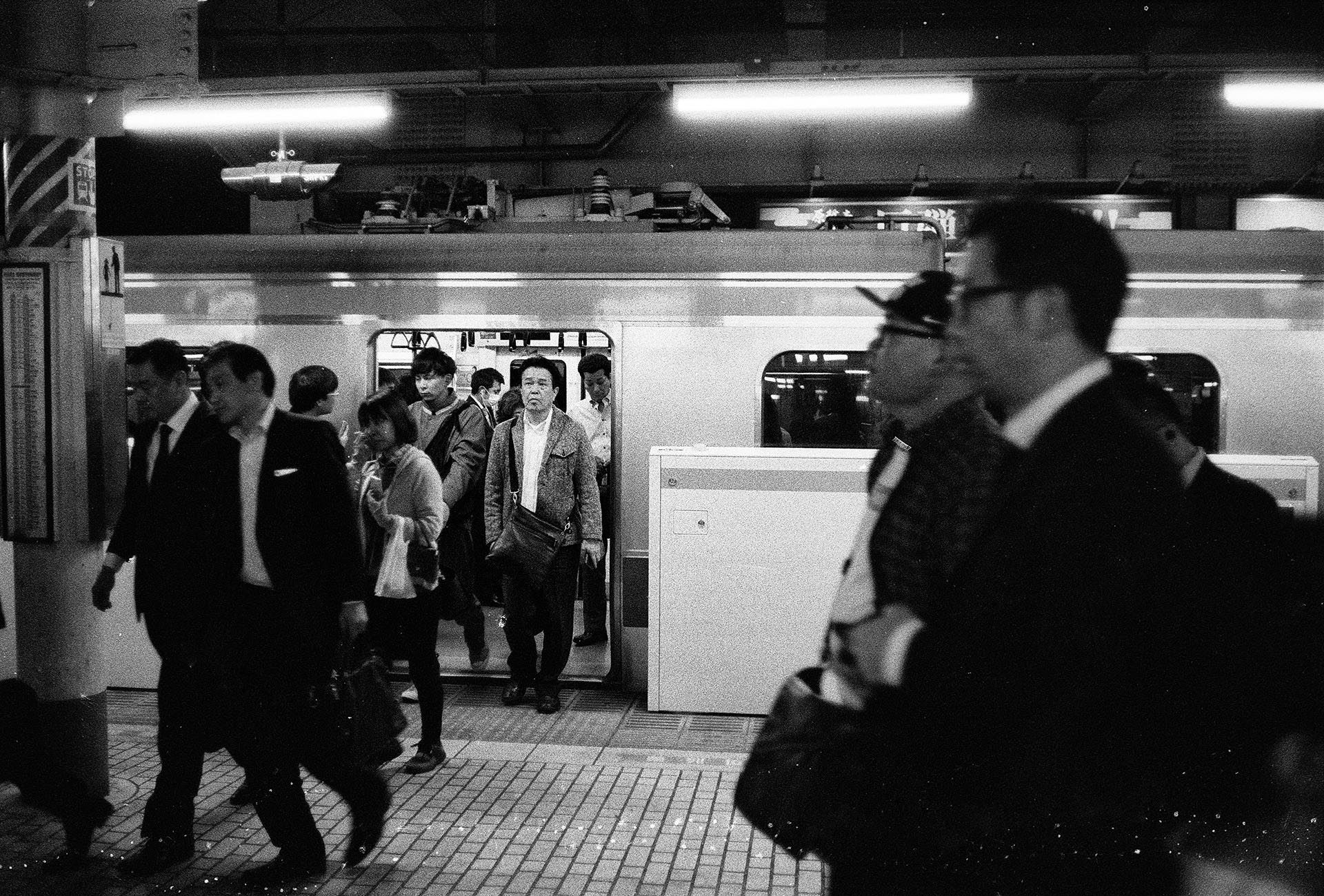
The Canon 7 is a manual focus rangefinder camera which was originally introduced in the 1960s. Following on from the Canon P, it was one of the most advanced rangefinders of its kind – the big kahuna of the Canon range. It easily blew away the equivalent Leica screw mount cameras of its time. However, the Canon 7 came into direct competition with the Leica M3, which had the new (patented) M mount system, where it inevitably couldn’t compete.

There were a couple of additional models produced as part of the 7 ‘series’, which had slightly modified features, namely the 7s and 7sZ. Both of these were much less common than the 7 – but not necessarily better.

Feature Specification
- M39 screw mount: The camera has the popular M39/LTM screw mount, which lets you use a large number of lenses from different manufacturers. Canon make some extremely nice matching lenses in a few different focal lengths, including the 35mm f2 and 50mm f1.2. These can be used on M bodies with an adaptor. However, note that M lenses can not be used on the Canon 7.
- Rewind, Shoot, and Lock: There are three different settings. One lets you shoot as normal, one allows you to rewind the film (useful for multiple exposures), and the last locks the shutter to prevent it from being triggered accidentally. This is something I wish all cameras had, and don’t really get why they don’t (looking at you, Leica).
- ‘Swing Door’ film loading: This is a feature that we now take for granted, but the back of the camera swings open to allow the film to be loaded – far easier than the bottom-loading of Leica rangefinders.
- Marked frame-lines: The 7 is the only rangefinder of its kind to mark the frame-line focal length in the viewfinder. In other words, you know whether you are looking at a 50mm or 35mm frame-line at a glance, without having to take your eye away from the scene.
- Selenium cell meter: Often these are no longer working due to their age and nature, but they do exist. However, as a sign of its times, the ISO range is fairly limited, stretching only from 6-400 – so not especially useful for low light situations. In practice, I’ve found that I never use mine.
- Film rewind indicator ‘eyeball’: One of the coolest things about the Canon 7, and another great feature. As you rewind the film, a small ‘eyeball’ style dot spins round – stopping when the film disengages. This is incredibly useful if you want to rewind the film without the leader completely disappearing into the cartridge – to make development easier, or to shoot a reel of double exposures, for example.
Size wise, the Canon 7 is slightly taller and thicker than an M2 or M6 body, and about the same as an M Typ 240. It is has an all metal construction, and is built like a tank.
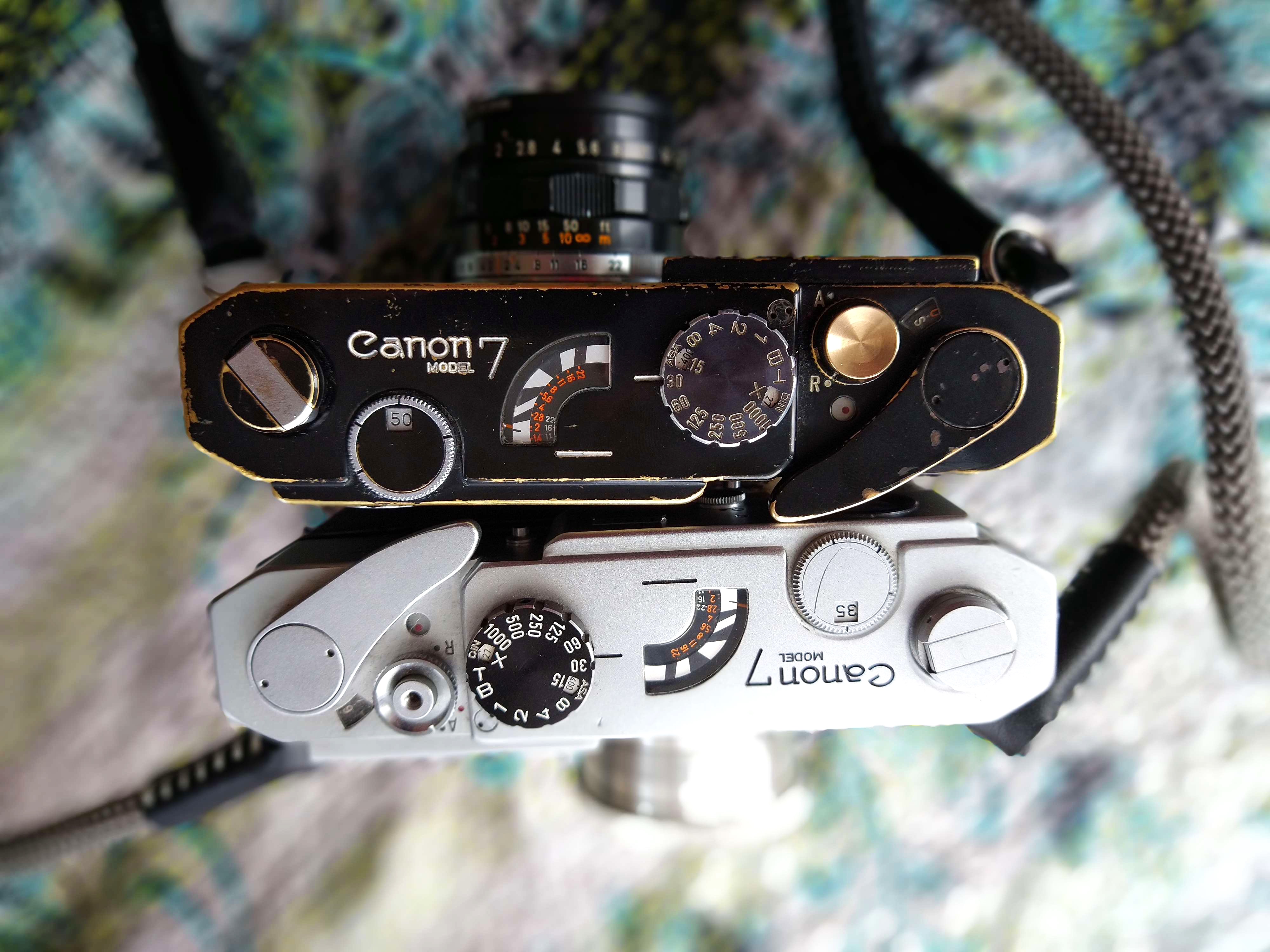
Black v. Silver
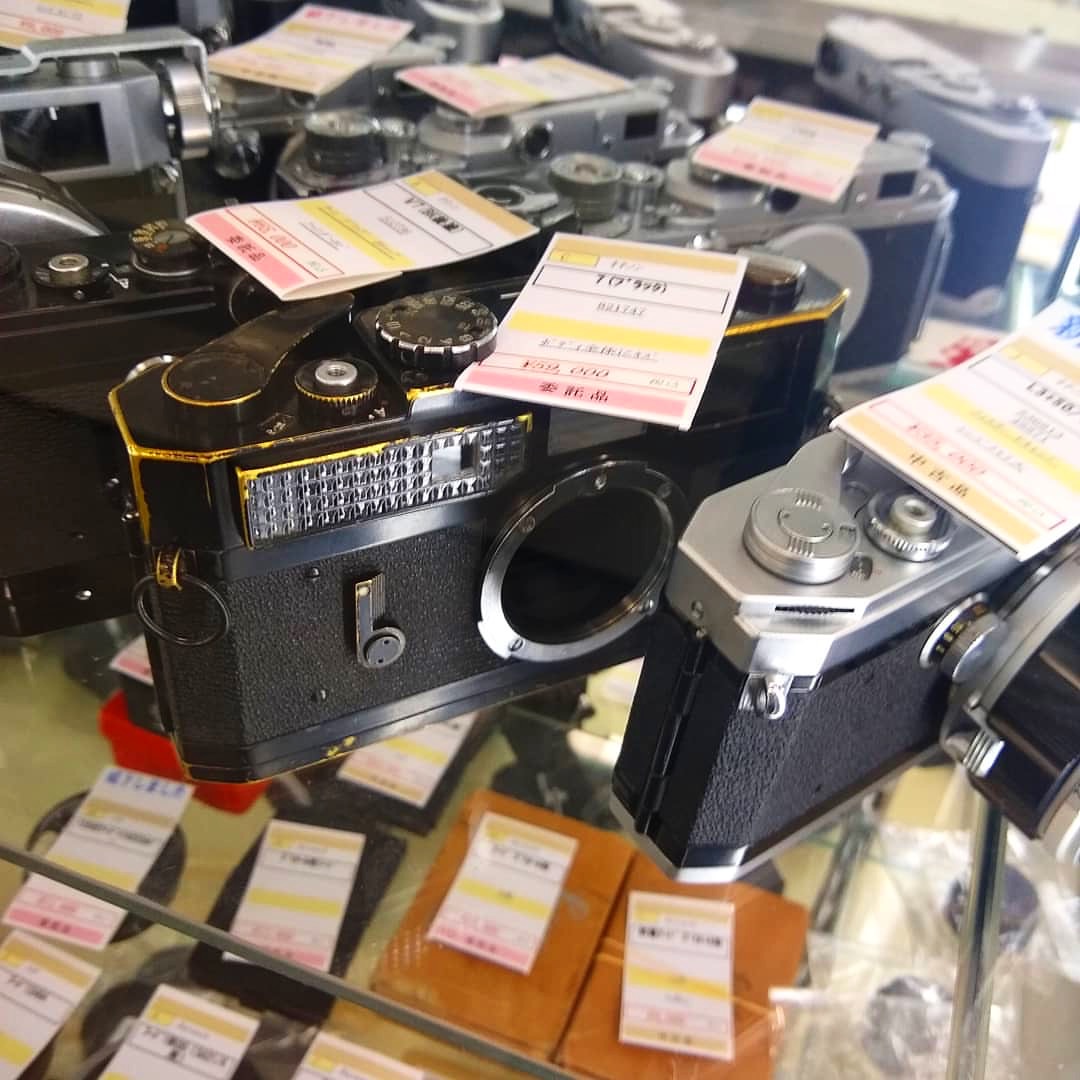
The Canon 7 was primarily available in silver. However, there were also some available in black. These are much rarer, and command a massively inflated price as a result. To illustrate that point… I had been looking for a black version for years with no success – including multiple trips across Japan. I was told by those in the know that I would be incredibly lucky to stumble across one in person, and when they did occasionally crop up online, they fetched prices of £2,000+. Added to that was the complication that there are a number of ‘black’ bodies floating around that were actually just silver ones painted black…
In the end I was extremely fortunate to come across a genuine black paint version in Tokyo for a (relatively) reasonable price.
Functionally, there is zero difference between the two cameras. The black one just seems to have a bit more character to it, given the rather beautiful way in which the paint wears away gradually to show the brass underneath. It’s this kind of detail that non camera people will think you are insane for caring about. “Wait, you mean… there’s no difference at all except the colour?”.

50mm f0.95

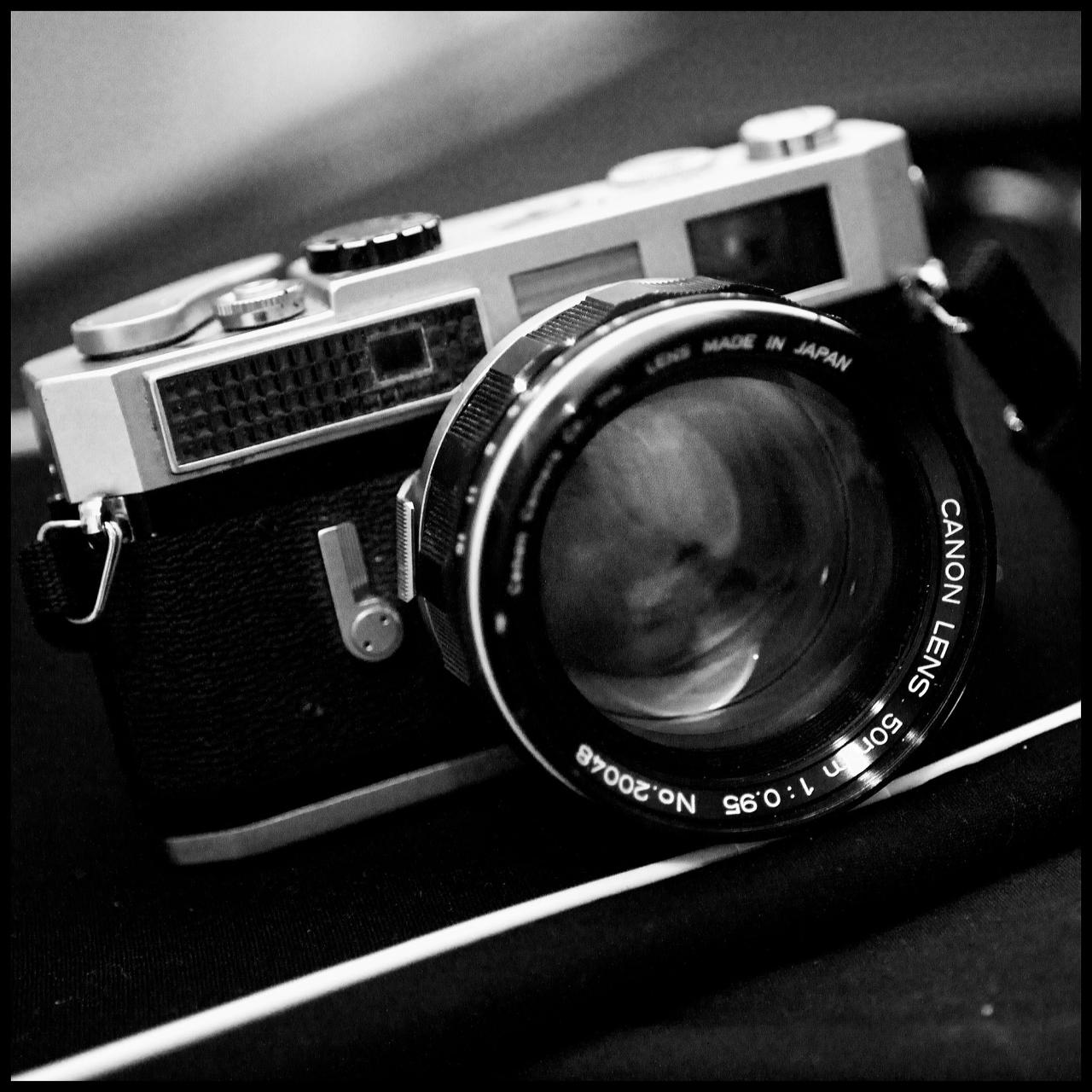
The Canon 7 is perhaps most well known for being the only camera body that the fabled Canon 50mm f0.95 was designed to work with – utilising a special bayonet locking system. However, nailing the focus with that lens on a film rangefinder is incredibly difficult, and ultimately many of these have since been converted to the Leica M mount to be compatible with a wider range of bodies. You can still find them kicking about as a package, and many people like the idea of keeping them together to preserve history or something, but I personally would always recommend the M conversions, as it helps keep the lenses alive. The bodies can still be used, and are still great in their own right – with or without the f0.95.

Things to Watch Out For
- Shutter curtain wrinkles: The shutter curtain of the Canon 7 is made of thin steel, and over time many of these have become crinkled. This doesn’t have an effect on the operation of the shutter so long as they aren’t too significant, though you may be able to negotiate a price discount if the wrinkles are prominent. In some ways this is actually a testament to the camera’s design. They aren’t at risk of developing holes or burns as cloth shutter curtains tend to, and they are far less complicated than bladed ones – which can be more easily damaged (I know this from experience!).
- Light meters: Many of the Canon 7 models you will find have dead light meters. Again, this isn’t a huge deal in practice if you are used to shooting film, and is always something you can use to negotiate a discount.
- Maximum ISO: When using the light meter, the maximum film speed supported is ISO 400. This is ridiculously low for a camera which was made to support fast lenses. You can of course compensate for this since the exposure is still manual, but it’s a bit of a pain if you rely on the meter.
- No hot-shoe: If you want to mount a flash, or use an external optical finder, you’re going to have problems. I’ve heard tales of folks glueing a hotshoe on the top of the camera, but this seems like sacrilege to me.
- Annoying strap lug placement: The location of the strap lugs means that the camera doesn’t sit flush against your body unless you use a case of some kind. More on that below.
My Experience
I have owned three different Canon 7 cameras – and still have two of them. The first one was silver, which I bought on eBay (and then sold) with an accompanying 50mm f0.95 lens. The second is a rather nice example of a silver model which I picked up in Kyoto in 2016, and the final one is the black version which I got from Lemon Camera in Ginza, Tokyo, in 2019. By way of comparison, I also have (or have owned) a Leica iiia, M2, M6, M8, and M Typ 240 – so I have a fair bit of experience with this style of rangefinder.

Taken on its own, the Canon 7 is a great camera. The viewfinder is large and bright, and actuating the shutter has a very satisfying tsschnk sound. It isn’t what I would call ‘quiet’, at least not in comparison to the cloth shuttered Leica clicks, but it isn’t obtrusive either. Overall I find the Leica M series cameras to feel and fit nicer in the hand with their rounded edges. However, the Canon 7 has a number of different features that the Leicas do not – such as that all important shutter lock mechanism. The two main things I actively dislike about the camera are the lack of hot-shoe, and the position of the strap lugs. I didn’t think I’d be too bothered about the former, as I rarely shoot flash, but I forgot that in order to use my 15mm Voigtlander screw mount lens on a film body I would need an optical finder, and it actually sucks that I can’t use it effectively with the Canon 7. The main issue I have though is that as the strap lugs are on the front of the camera – rather than the sides – and as a result it ends up unbalanced if you wear it on a longer shoulder length/cross-body strap – tipping it upwards as if flipping over. That really is a pain in the arse, as the body no longer sits flush against your side, and the front of the lens is more likely to get caught as a result… not to mention the fact that it looks ridiculous. This could well be remedied with a leather case, but I’m not really a leather case sort of guy – so I will just live with it.

Features and minor annoyances aside, I love the Canon 7. It just feels really nice to use, which is the kind of wishy washy turn of phrase that people complain about in reviews, but it’s true. I especially like the viewfinder, which at 0.8x magnification is relatively large and easy to use. It is solid enough to rely on in any conditions, and I don’t feel especially concerned about shooting it in the pouring rain like I would the M6. When all is said and done, the black model has become my favourite rangefinder, and probably one of my favourite cameras.
Price and Availability
Finding a ‘silver’ Canon 7 on the second hand market isn’t all that difficult – they are by no means rare – though the majority of them will need to be imported from Japan. Prices vary from about £50 to £180 depending on the condition – and you can pick up a really decent copy on the lower end of the scale if you look about. Genuine black paint versions are very rare, and when they do pop up online, usually only do so in Japan for about £1-1.5k. Again, you can get lucky if you spend some time hunting around the camera shops of Tokyo, but it’s by no means a guarantee. Bodies that have been painted black from silver do sometimes come up on eBay for a few hundred – but these should be easy to spot by the lack of authentic brassing. Keep an eye out for this.
Images