


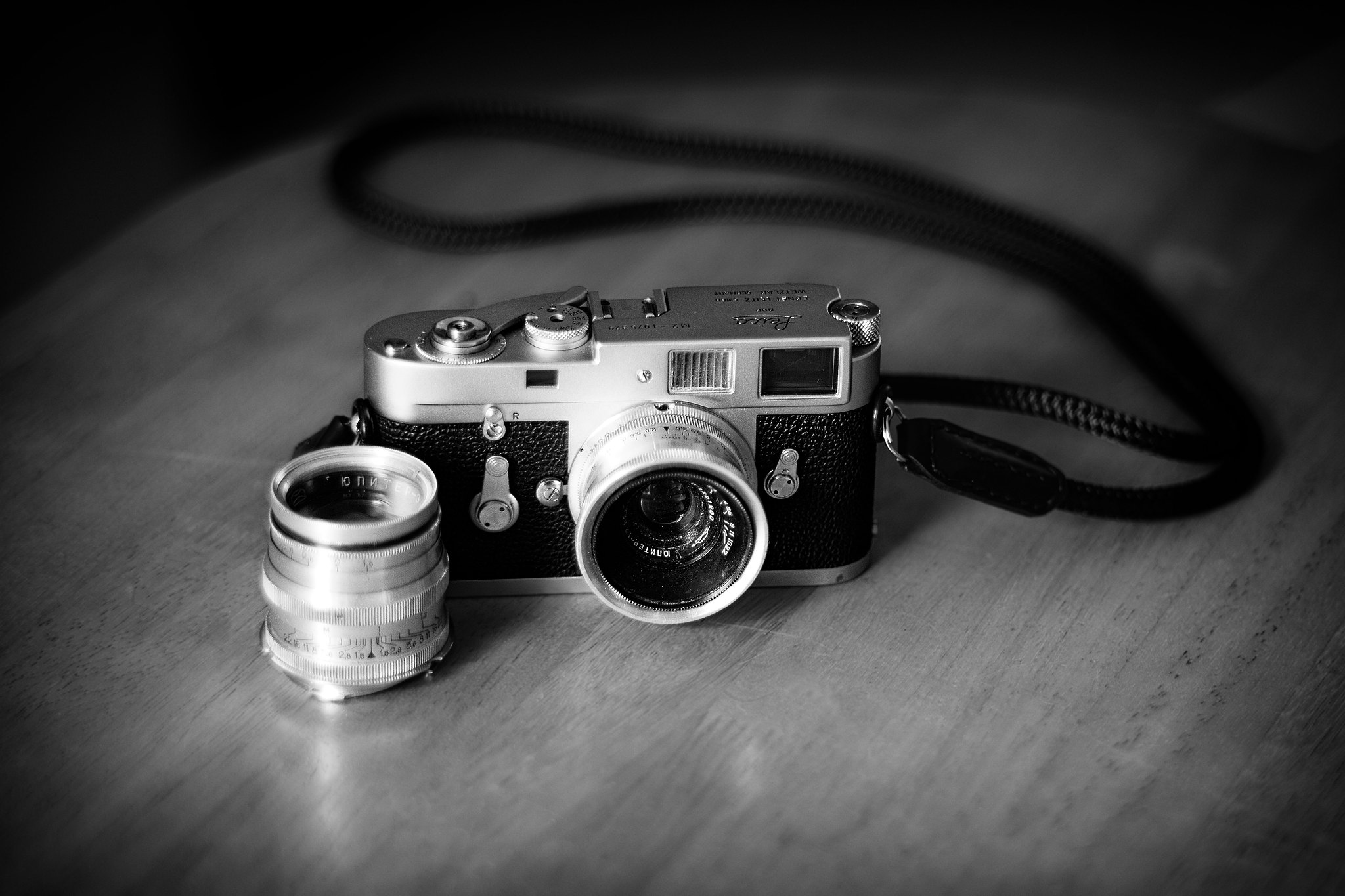
The M2 is one of Leica’s legendary 35mm rangefinder cameras. It was introduced in 1957, which is (rather confusingly) three whole years after the M3 came out. If anybody can explain the logic of that naming convention, I’m all ears.

I picked up an M2 from eBay all the way back in 2015, after I came to realise just how dependent I had become on the meter of the M6. Sure, that camera may well consistently produce perfectly exposed pictures, but I felt like I had become something of a slave to the red arrows in the viewfinder, shutting off my brain – though I will admit that getting them both to light up is bizarrely satisfying.
When the plastic tip of the advance lever of my M6 snapped off whilst on a trip to Italy, I bit the bullet and went fully mechanical. The M2, you see, has no fancy bells or whistles. It’s about as straightforward a Leica as you can get. Purposefully simplified from the M3, even the bevels round the windows on the front of the camera have been smoothed and flattened out. There’s no meter, no battery, and you even have to manually reset the frame counter with each roll (something that I naturally always forget to do). It is almost ridiculous in many ways, but… that’s also kind of why I like it. There was no danger the single chunk of metal that comprised the M2’s advance lever was going to let me down at least, and the myriad of scratches and dents on the model I got seemed testament to its reliability.
Metering
If you do rely on a meter, there are plenty of shoe-mount options available out there, and I now regularly make use of one from Keks, which almost looks like it was designed specifically to match the camera. It isn’t quite as practical as the built-in indicator of the M6, but it gets the job done.

I have sometimes been known to go with the far less practical, but much cooler looking Kopil from time to time as well, which I think gives the M2 the appearance of a war-time instrument of espionage.

Idiosyncracies
Aside from the lack of meter, there are a few particulars about the M2 that are worth pointing out.
- Self-timer – Not all M2s feature a self-timer – something that is usually pretty obvious just by looking at the front left of the camera. I have genuinely never used this function on my rangefinders, but I guess if you like taking lots of self-portraits it might be important (!?).
- Frame lines – The M2’s viewfinder has a magnification value of 0.72, which allows for the display of 35mm frame lines. This is in contrast to the M3, which has a magnification factor of 0.91 – something that in practice means the 50mm frame lines fill the entire field of vision. For this reason, if you intend to regularly shoot with a 35mm lens, the M2 is the better choice. If you prefer to use a 50mm, then an M3 might be worth considering.
- Button v. Lever rewind – To allow the film to be rewound, you need to engage the rewind lever, or button. Earlier versions of the M2 feature the latter method. Most models with a button rewind do not feature a self-timer, but some do. Opinions (and therefore the price) of these different combinations vary wildly.
- Rewind knob – The actual rewind knob on the M2 operates quite differently to the ‘fast rewind’ implementation of the M6 – and is considerably slower to operate. This might have mattered back in the day when people were using these professionally and time was of the essence, but shouldn’t really make any tangible difference now – apart from perhaps giving you sore fingers.
- Film loading – The M2 has a removable film take-up spool, and loading a canister can be a bit fiddly. However, it doesn’t require you to cut the film like earlier Leica screw-mount bodies. Just don’t lose the damn thing!
- Black paint bodies – Small numbers of M2s were produced with black paint, rather than the more common chrome finish. These display signs of wear in what is generally considered to be a very pleasing manner, with the brass showing through – and as such command stupid prices (should you be able to find one). Don’t be fooled by the many out there which are actually chrome but been re-painted black, as these will not produce the same effect over time.
- ISO Indicator – There is a dial on the rear of the camera that you can set to identify what speed of film is loaded in the camera. However, this has no relevance to ‘modern’ film speeds (at least on the one I have), so is pretty useless.
My Experience
I am not going to spend much more time listing detailed specs or lengthy technical comparisons of the M2. You can find all of that elsewhere – and what can really be said about this camera in that department that hasn’t already? What I can offer is my own experience, particularly as somebody who has shot with many different rangefinders. The verdict after many years of ownership is that this remains one of my all-time favourite cameras.

For a start, the M2 has a nice bright viewfinder with 35mm framelines, and comes in at a magnification that means that even I, with my terrible eyesight can (almost) see them. The contours of the body are nice and smooth; the shutter sounds great; and there is an incredibly satisfying amount of resistance when advancing the film. I never worry about shooting the M2 in the rain, or it suddenly breaking down.
I’ve seen other folks say that the M2 is impractical, and that seems like total nonsense. Firstly, what do you expect from a camera released over sixty years ago? Secondly, the fiddly idiosyncratic elements like the removable film take up-spool are annoying, but hardly get in the way of how effective a tool it is. For me, the bottom line is that I always have a lot of confidence in the M2. It is predictable, and reliable in a whole host of situations. Anything that goes wrong will almost certainly be down to me rather than the camera – which is invaluable.

The hilarious thing about Leica rangefinders is that the differences between them can seem so minor and inconsequential – especially to people who only have a passing interest in film photography. It can too easily appear as some kind of elitism or obsession with the tool rather than the process – but when you commit to a particular camera like the M2 and spend so much time using it, those details do become important. Back when I got my M2 in 2015, it was slightly worse for wear, and so it went for just over £300. Nowadays, in the UK you’d be lucky to find one for less than £1,000 – which seems pretty nuts… though I suppose it is also a testament in some ways to the reputation and longevity of these cameras.
If you are considering a Leica rangefinder, and don’t have an issue metering manually, then I would always recommend the M2. It is such a simple, beautiful, and reliable camera. If you really have to have a meter, and a shoe-mounted option seems like too much of a faff, then you’ll need to consider the M6 instead – but be aware that the price difference between the two models has been increasing exponentially over the years with the popularity of the latter in particular sky-rocketing.

Photos
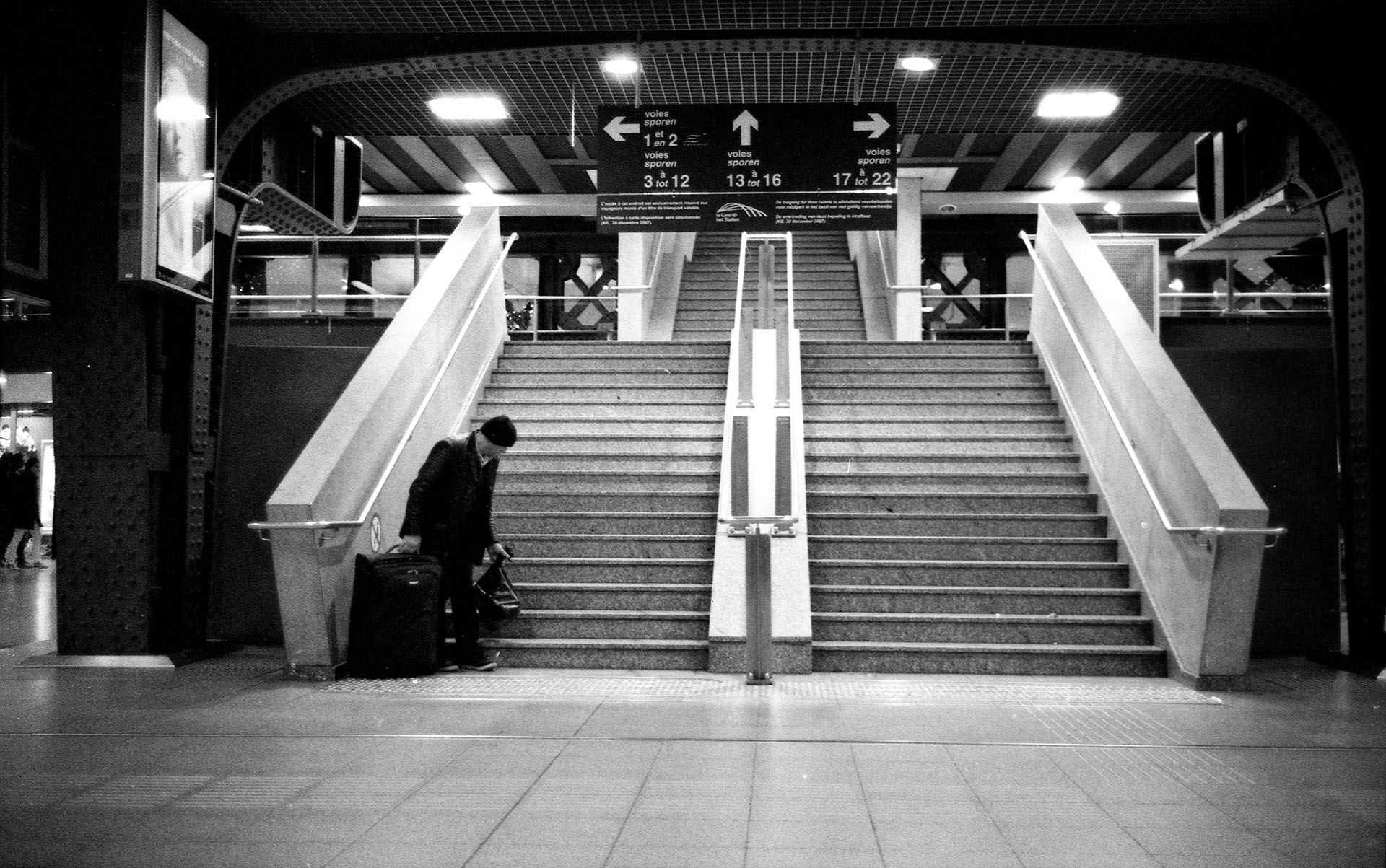
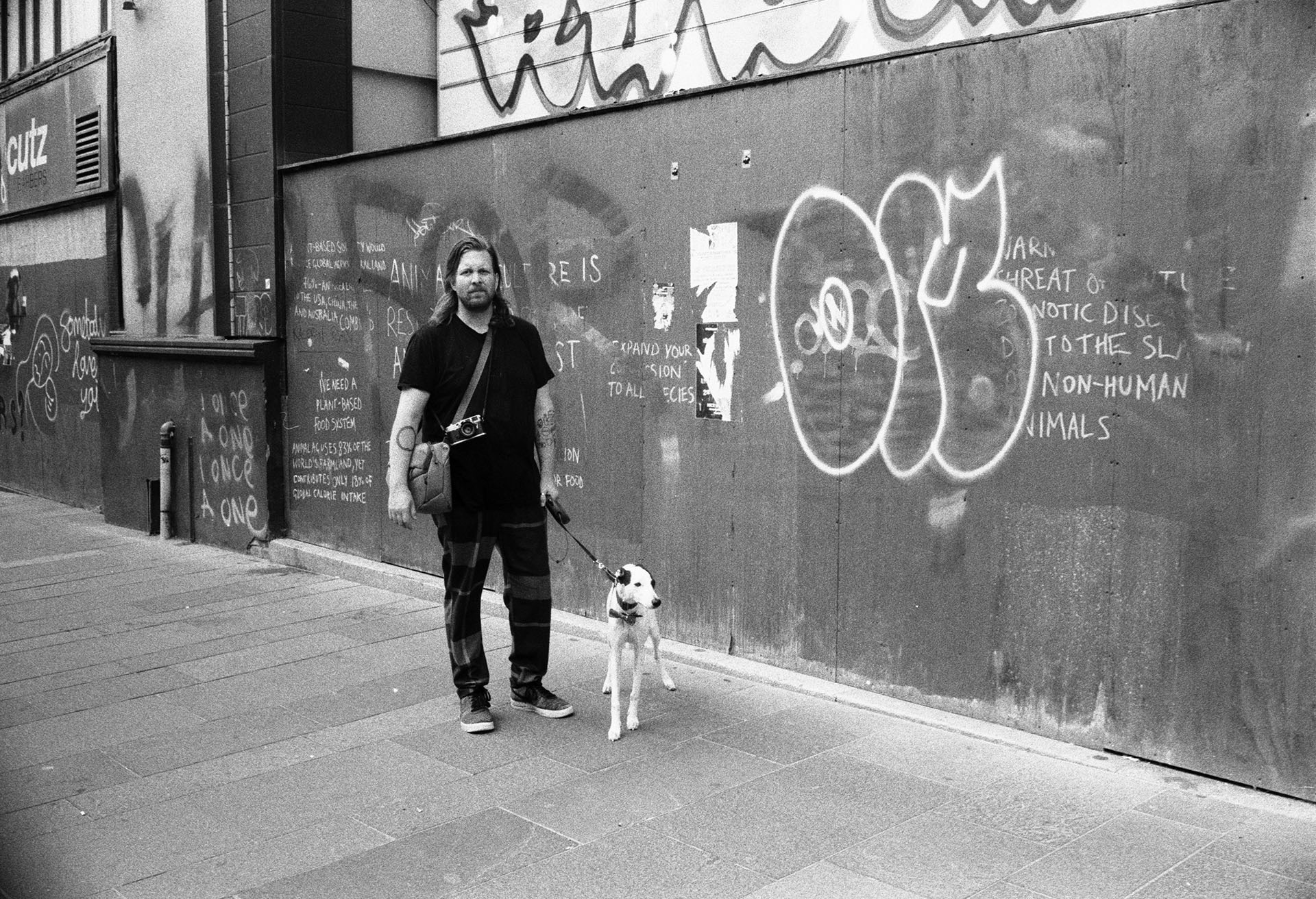
Below are a selection of pictures I’ve taken with the M2 over the past few years.
































Disclaimer: As usual, this article isn’t intended to be a comprehensive, pixel-peeping review. Rather, it’s a highly subjective, real world review, reflecting my own research and experience as someone who has shot with a lot of different cameras and lenses over the years. No aperture comparison charts here. Any flaws in the images are almost certainly down to me rather than the camera.